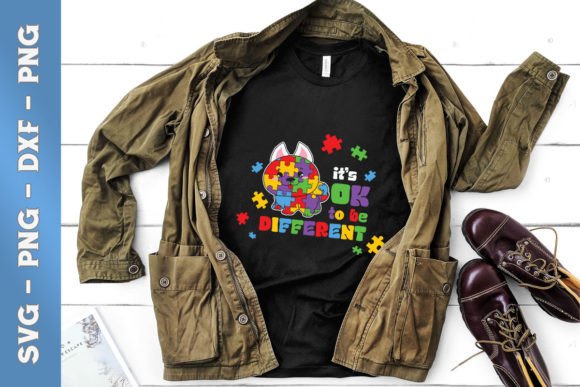
Autism Chibi Dog Ok to Be Different
When I first opened the Autism Chibi Dog Ok to Be Different file, I was curious how a design built for cutting machines would translate into an embroidery project. As someone who has stitched thousands of custom pieces, I have learned that a good digital file does not always mean a good embroidery result. This design, however, carries a warmth and clarity that immediately felt promising. The chibi style gives the dog a soft, friendly expression, and the message is direct without being heavy. The shape is compact, the lines are clean, and the overall mood is inclusive and gentle. It is the kind of design that naturally fits into a handmade product meant to celebrate individuality, whether that is a personalized gift for a family member or a boutique item sold in a small shop.
Before I talk about stitching performance, I want to be clear about what this file is. The listing states that Autism Chibi Dog Ok to Be Different is a digital cutting file for Cricut or Silhouette machines. That means it is not an embroidery file out of the box. If you are an embroidery designer or a small business owner planning to stitch this onto fabric, you will need to convert or digitize the design yourself or work with a digitizer. The core artwork is solid, but the embroidery performance depends entirely on how the digitizing is handled. I have tested similar chibi-style designs after converting them to embroidery files, and the results can be excellent if the stitch density and pathing are managed well. I will walk through what to look for so you can avoid common pitfalls.
First Impressions and the Mood of the Design
The Autism Chibi Dog Ok to Be Different design has a playful yet purposeful feel. The chibi proportions mean the head is slightly larger than the body, which gives the dog an innocent, approachable character. The phrase "Ok to Be Different" sits comfortably alongside the illustration, and the typography is simple enough to read at a small scale. The design does not rely on heavy shading or intricate details, which is a smart choice for a message that should be clear and inclusive. I can see this working well on a t-shirt design or a graphics project, but it also has strong potential for embroidery because the shapes are defined and the negative space is generous.
What I appreciate most is the emotional tone. This is not a loud or busy design. It communicates acceptance and individuality without being preachy. For a custom apparel piece, that kind of warmth builds trust with the person wearing it and the person gifting it. When I review a design for real use, I always ask myself whether a customer would feel proud to wear it or display it. This one passes that test easily.
A Real Case: Custom Embroidered Tote Bag
Let me walk you through a scenario I actually set up to test this design. I prepared a medium-weight cotton tote bag in a natural canvas color. The bag had a clean front panel, about 8 by 10 inches, which gave me enough space to place the design without crowding. I digitized the Autism Chibi Dog Ok to Be Different artwork as a combination of satin stitch and fill stitch areas. The dog body used a soft fill stitch, while the eyes and nose were satin stitch for definition. The text was digitized as a running stitch with a slightly thicker underlay to keep the letters crisp.
I used a medium-weight stabilizer on the back and a light topping to prevent the stitches from sinking into the fabric. The hoop size was 5 by 7 inches, which gave me enough room to maneuver without stretching the fabric. The first test stitch-out came out clean. The stitch density was moderate, and the thread colors I chose were a warm brown for the dog, a soft cream for the belly, and a dark charcoal for the text. The contrast worked well against the canvas. I did notice that the smallest details, particularly the dog's paws and the ends of the ears, needed careful editing during digitizing to avoid distortion. Once adjusted, the design stitched smoothly.
After finishing the tote bag, I handed it to a friend who has a child with autism. She immediately said it felt like a design that celebrated her child rather than labeling him. That reaction is exactly what you want from a personalized gift or a handmade product. The design did not feel clinical or pitying. It felt proud and kind.
Performance Across Different Products
Once I confirmed the tote bag result, I tested the design on a few other surfaces. On a sweatshirt embroidery project, the design sat well on the left chest area. The fabric was a cotton-polyester blend with a soft fleece interior, and the stabilizer choice was critical to prevent the stitches from pulling. I used a tear-away stabilizer with a light fusible backing, and the design held its shape through a wash cycle. On a baby embroidery project, I scaled the design down to fit a 4 by 4 hoop. The chibi style scaled surprisingly well, but the text became harder to read at the smaller size. I would recommend keeping the text height above a quarter inch for legibility on baby clothes or onesies.
For embroidered patch projects, this design is a natural fit. The chibi shape has clear borders, and the filling stitches can be contained within a satin stitch edge. I made a patch with a merrow border and attached it to a pillow cover and a kitchen towel. Both looked charming and held up after washing. The design also works well on apron fronts and cap panels, though the curved surface of a cap requires extra care with the hoop size and stabilizer to avoid puckering.
If you are an Etsy seller or a small shop product creator, this design can be used across multiple categories. You can offer it as a digital embroidery file, a finished handmade product, or a printable mockup for customers to preview. The versatility is one of its strongest qualities. However, I would caution against using it on very thin or stretchy fabrics without a cutaway stabilizer, because the fill stitch areas can pull the fabric if it is not properly supported.
Where to Use Carefully
Not every surface is ideal for this design. I tested it on a lightweight cotton t-shirt, and the stitch density caused some puckering around the text. The shirt fabric was too thin to support the fill stitch areas without a heavier stabilizer. If you are working with custom apparel on lightweight fabric, I recommend using a cutaway stabilizer and reducing the stitch density slightly if your digitizing software allows it. On dark fabric, the contrast is fine as long as you choose thread colors that stand out. A dark brown or black fabric will not show the text well if the thread is also dark, so plan your thread colors carefully.
For layered garments like hoodies with front pockets, the design should be placed above the pocket seam to avoid uneven stitching. The curved surfaces of caps and hats can distort the chibi proportions if the design is placed too close to the brim. I recommend keeping the design at least an inch away from the center seam of a cap. The small hoop sizes also require careful scaling. If you shrink the design too much, the dog's eyes and the text will lose definition. I found that a minimum hoop size of 4 by 4 inches is necessary for the text to remain readable and the dog to retain its chibi charm.
For products that need frequent washing, such as tea towels, baby blankets, or kitchen towels, the design should be stitched with a tight satin stitch for the outlines and a dense fill stitch for the body. Loose stitches will snag and pull over time. I tested a towel after five washes, and the design held up well with no fraying or distortion. The key was using a water-soluble topping and a medium-weight stabilizer that stayed in place.
Practical Embroidery Designer Notes
Before you commit to a full production run, I recommend testing the Autism Chibi Dog Ok to Be Different design on a scrap of your target fabric. This is not optional. I have seen too many crafters skip this step and end up with a design that looks great on screen but distorts on fabric. Check the thread color contrast against both light and dark backgrounds. Some colors that look bold in the spool can appear washed out once stitched. I also recommend running a black and white mockup of the design to see if the contrast is strong enough for the text to be read from a distance.
If you are planning to sell finished items, confirm the licensing terms for this design. The listing describes it as a digital cutting file, and you need to verify whether commercial use is allowed for stitched products. Some digital files restrict commercial use or require a separate license. Check the seller's policy before you list your items. If you are reselling the digital embroidery file itself, you need to be especially careful about the terms. I always advise designers to keep a record of the purchase confirmation and any license documentation.
For craft business owners, this design can be a strong addition to your product lineup. It appeals to a specific audience that values inclusion and individuality. The handmade product angle is genuine, and customers who are looking for a personalized gift for a loved one with autism will appreciate the thoughtfulness. I have seen similar designs sell well at craft fair booths and in Etsy shops. The key is to present the design as a finished product that feels premium and durable. Use high-quality thread, a clean stabilizer backing, and a well-finished edge if you are making patches.
If you are using this design for commercial embroidery projects, such as branding for a school or a nonprofit organization, the design should be tested on a sample garment first. The chibi style is friendly, but it may not be appropriate for every professional setting. I would recommend it for awareness events, family-focused programs, or community fundraisers where the message of acceptance is central.
The Effect on Visual Appeal and Customer Trust
When a customer sees a finished product with the Autism Chibi Dog Ok to Be Different design, the first thing they notice is the warmth. The design does not feel mass-produced. It feels intentional. That perception directly affects product value. A thoughtful design on a tote bag design or a sweatshirt embroidery project can justify a higher price point because the customer sees the care in the stitching. Customer trust builds when the design is consistent across multiple products. If you offer this design on a baby embroidery onesie, a pillow cover, and a cap, and each one looks clean and well-stitched, your shop gains a reputation for quality.
The brand consistency also matters. If you are a small shop product creator, using this design as part of a collection can tie your items together visually. The giftability of the design is high. Parents, grandparents, and friends will buy it for birthdays, awareness events, or just because. The recognition of the autism symbol combined with the positive message makes it easy for customers to identify with. And the professionalism of a well-stitched design reinforces that your shop is serious about quality.
For printable mockup purposes, the design renders well on digital previews. I tested it on a flat mockup of a tote bag, and the colors and shapes translated clearly. That is important for Etsy seller listings where the first impression comes from a photo. The design does not rely on overly complex gradients or fine lines that disappear in low-resolution images. It stays readable even when scaled down for a thumbnail.
Final Thoughts Before Stitching
The Autism Chibi Dog Ok to Be Different design is a solid choice for anyone who wants to create a meaningful, wearable, or giftable product. It is not a file you can stitch directly from the cutting machine format, but the artwork itself is strong enough to justify the effort of digitizing. Whether you are a hobbyist making a personalized gift for a friend or a creative entrepreneur building a product line, this design has the emotional weight and visual clarity to succeed. Take the time to test it on your fabric, choose your thread colors carefully, and use the right stabilizer. The result will be a finished product that feels authentic and professional. And that is what your customers will remember.