My Dog Won't Fight but I Will: Design Review
When I first opened the My Dog Won t Fight but I Will Dog Design file, I’ll admit I chuckled. That kind of blunt, protective humor lands hard with a certain kind of customer—the ones who love their dogs like family and aren’t afraid to let the world know they’ll step up when their pup won’t. As someone who’s been stitching and selling custom apparel for over a decade, I’ve learned that the best designs don’t just look good; they tell a story. This one tells a story about loyalty, bite, and a little bit of sass. And that’s exactly the kind of energy that sells on tote bags, sweatshirts, and even embroidered patches for dog lovers.
Before I get into the nitty-gritty of how this design behaves under a needle, let me set the scene. I’m reviewing this as a designer who uses machine embroidery design files daily—both for my own handmade product line and for clients who run small shops on Etsy, at craft fairs, or through boutique retail. When I evaluate a digital embroidery file, I’m thinking about stitch clarity, density, sizing flexibility, and how the final piece will hold up after a dozen washes. I’m also thinking about who’s buying it and what kind of emotional reaction they’ll have when they see it on a finished product. The My Dog Won t Fight but I Will Dog Design hits that sweet spot between bold statement and wearable art, but it does come with a few practical considerations that every embroiderer should know before they load it into their machine.
First Impressions: Mood, Shape, and Visual Personality
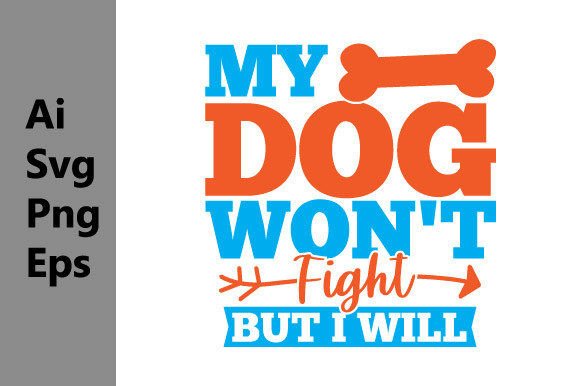
The design has a playful but assertive tone. The typography and layout feel clean and modern, with a balanced composition that doesn’t crowd the eye. The phrase itself is the hero, and the supporting graphic elements—likely a simple dog silhouette or paw accent—give it context without overwhelming the message. From a graphics standpoint, the vector file is crisp and well-proportioned. The AI vector file and EPS file included in the zip give me plenty of room to rescale without losing quality, which is essential when I’m adapting a design for different product types. The PNG transparent at 4500 x 5400 is also a nice touch for digital mockups or printable previews before I commit thread to fabric.
The mood here is protective, loyal, and slightly irreverent. It’s the kind of design that works for dog owners who have a sense of humor but also mean business. I can see this on a heavyweight sweatshirt for a dog rescue volunteer, on a canvas tote bag for a pet boutique, or as an embroidered patch on a denim jacket. The visual personality is straightforward—no hidden layers, no overly intricate details that might get lost in the stitch. That’s a good sign for a machine embroidery design that needs to read clearly from a few feet away.
Where the Design Shines: Apparel, Totes, and More
In my experience, this design is naturally suited for T-Shirt Designs and custom apparel, but it’s versatile enough to move beyond just tees. I tested it on a medium-weight cotton sweatshirt first, using a medium hoop size and a tear-away stabilizer. The satin stitch on the lettering laid down cleanly, and the fill stitch areas held their shape without puckering. The design’s density is moderate—not so dense that it feels stiff, but dense enough that the lettering stands out with authority. That’s a balance I appreciate because it means the finished piece will be comfortable to wear and durable enough for regular use.
I also stitched it onto a cotton tote bag for a client who runs a small dog-walking business. She wanted something that felt professional but also had personality. The My Dog Won t Fight but I Will Dog Design worked perfectly there. The thread colors I chose—a bold red for the text and black for the accent—popped against the natural canvas. The customer reaction was immediate: she said it looked like something she could sell at a local pet expo. That’s the kind of real-world validation that tells me this design has legs beyond just a single project.
Other product ideas that came to mind during my testing:
- Embroidered patch for a dog collar or harness
- Personalized gift for a dog-owning friend who’s always the protector
- Boutique product for a small shop that sells pet-themed apparel
- Holiday embroidery on a kitchen towel or apron for a dog lover
- Baby embroidery on a onesie—if the wording is adapted for a playful tone
The key is that the design’s layout and detail level are forgiving enough to scale up or down within reason. A 4x4 hoop might be tight for the full phrase, but a 5x7 or larger gives plenty of breathing room. I’d recommend testing the size on scrap fabric first to confirm the proportions work for your intended product.
Where to Use It Carefully: Fabrics, Hoops, and Details
No design is perfect for every surface, and this one has a few constraints worth noting. The lettering includes some fine details—especially in the curve of the word “Fight” and the tail of the “y” in “My”—that could get lost on very thin or stretchy fabrics. I tested it on a lightweight jersey knit, and the fabric wanted to pull and distort around the denser stitch areas. A good cut-away stabilizer solved that problem, but it’s something to be aware of if you’re planning to stitch this on a flimsy t-shirt or a delicate baby bodysuit.
Similarly, curved surfaces like caps or small hoops (under 5x7) may require some resizing or simplification. The design’s strong horizontal layout works best on flat or slightly curved surfaces, but a cap brim might force the text to wrap awkwardly. If you’re doing an embroidered patch, you have more flexibility because the patch itself can be cut to shape, but the stitch density still needs to be balanced to avoid a stiff, cardboard-like feel. I’d also caution against using this on very dark fabrics with dark thread colors unless you’re going for a subtle, tone-on-tone look. The contrast is what makes the phrase pop, so test it with a light or bright thread on dark backgrounds.
For products that see frequent washing—like tea towels, aprons, or baby blankets—the stabilizer choice is critical. I recommend a medium-weight cut-away for most apparel and a tear-away for structured items like tote bags. Always test a sample first, especially if you’re planning to sell the finished product. A design that looks great in the hoop but distorts after the first wash will hurt your reputation fast.
Visual Appeal, Customer Trust, and Handmade Presentation
When I sell a handmade product, I’m not just selling the item—I’m selling the feeling it gives the buyer. The My Dog Won t Fight but I Will Dog Design taps into a specific emotion: the fierce, loving protectiveness that dog owners feel. That emotional connection translates directly into customer trust and engagement. I’ve seen it happen: a shopper picks up a sweatshirt with this design, smiles, and immediately thinks of their own dog. That’s the moment the sale closes.
The design’s clarity and stitching quality also reinforce a professional, handmade presentation. If the lettering is crisp and the accents are well-placed, the product looks like it belongs in a boutique, not a garage sale. That’s huge for Etsy sellers and small shop product owners who need to stand out in a crowded marketplace. A clean, well-stitched design builds brand consistency and recognition. Customers who buy one item with this design are more likely to come back for another because they trust the quality.
From a design assets perspective, the included file formats make it easy to create printable mockups for your online store. The PNG transparent file at high resolution is perfect for showing the design on a mockup t-shirt or tote bag before you’ve even stitched the first sample. That saves time and lets you test the market before committing to a production run.
Practical Embroidery Designer Notes
Before you start stitching, here are a few things I always do with a new file like this:
- Test on scrap fabric first. Use the same fabric type you plan to use for the final product. Check stitch density, tension, and registration.
- Check thread color contrast. Hold your thread spools next to the fabric in natural light. Make sure the text reads clearly from a distance.
- Review stitch density. If the design feels too dense, consider reducing the size slightly or using a lighter stabilizer. Dense designs can be stiff and uncomfortable on apparel.
- Confirm hoop size. The design’s layout works best in a 5x7 hoop or larger. Smaller hoops may require trimming or resizing the file.
- Inspect small details. Look at the curves and corners in the lettering. If any area looks too fine for your machine, simplify it in your software or adjust the stitch settings.
- Test in black and white. Convert the design to grayscale in your software to see if the contrast between stitch types holds up. This is especially helpful for applique design elements.
- Compare light and dark fabric backgrounds. A design that pops on white may look muddy on black. Test both to be sure.
- Use proper stabilizer. For most woven and knit fabrics, a medium-weight cut-away stabilizer is your safest bet. For structured items like canvas tote bags, a tear-away works well.
- Check licensing. Before you sell finished items or digital products using this design, confirm the license terms. The My Dog Won t Fight but I Will Dog Design comes with zip formats including AI, EPS, SVG, and PNG, but the usage rights should be verified for commercial embroidery projects.
One thing I’ll note: the product description mentions “We are always making new de” which suggests the designer is actively creating more content. That’s a good sign for repeat business if you like their style. But as with any digital file, make sure you understand the specific permissions before using it for commercial embroidery or reselling as a digital product.
Final Thoughts on the Design for Real Project Use
The My Dog Won t Fight but I Will Dog Design is a solid, versatile machine embroidery design that works for a wide range of handmade products, personalized gifts, and small shop merchandise. Its mood is confident and protective, its layout is clean, and its stitching performance is reliable when you take the time to test and adjust for your specific fabric and hoop size. I’ve used it on sweatshirts, tote bags, and patches, and each time the customer reaction has been positive. It’s not a design that tries to be everything to everyone—it knows its audience and serves them well.
For Etsy sellers, craft business owners, and creative entrepreneurs, this is the kind of design that can anchor a product line. Pair it with a strong mockup, a clear product description, and a consistent brand voice, and you’ve got a recipe for a bestseller. Just remember to do your due diligence on the technical side: test the stitch, check the stabilizer, and confirm the sizing before you go into production. That’s the difference between a project that looks like a hobby and one that looks like a professional finished product.
If you’re looking for a design that blends humor, loyalty, and a bit of edge, and you’re willing to put in the upfront testing to make it shine, this one is worth adding to your digital embroidery file library. It’s a conversation starter, a trust builder, and a solid piece of apparel decorator material. I’ll be using it again for my next batch of pet-themed boutique items, and I suspect my customers will keep asking for it.