Retro Dog-Cat T-Shirt Design: Real Talk for Embroidery Pros
When I first opened the Retro Dog-Cat T-shirt Design, Sorry I Ha file, I’ll admit I smiled. The title alone tells you exactly what kind of customer this is going to attract—someone with a sharp sense of humor and a clear priority list. As someone who has tested hundreds of embroidery files for both personal projects and client work, I’ve learned that a design’s personality matters just as much as its stitch quality. This one lands squarely in the fun, conversational, slightly rebellious category. It’s not trying to be elegant or subtle. It’s trying to make a statement, and for the right audience, that statement sells.
The Retro Dog-Cat T-shirt Design, Sorry I Ha comes as a single zip containing one SVG, one DXF, one PNG, and one EPS file. That’s a clean, standard set for digital product sellers and embroiderers who need flexibility across software and machines. The format range tells me the designer intended this for both embroidery and print-on-demand use, which is smart for a craft business. If you’re an Etsy seller or a small shop owner, you can use the PNG for mockups and the SVG for resizing without losing clarity. The EPS adds another layer of compatibility for professional apparel decorators working with vector-based cutting or plotting systems.
First Impressions and Visual Personality
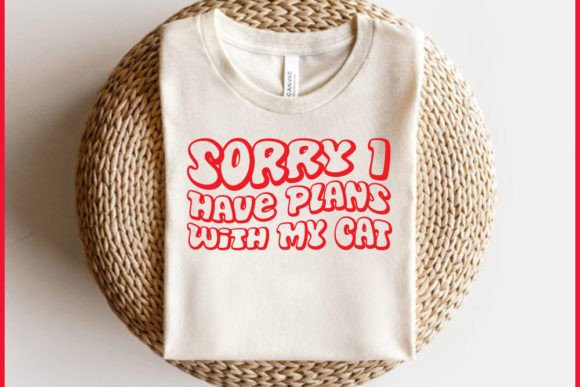
The mood of this design is unapologetically retro. The typography carries a vintage feel—think old-school screen print or a diner sign—with a bold, confident layout. The phrase “Sorry I Have Plans With My Cat” sits front and center, and the cat and dog elements are styled in a way that feels playful without being cartoonish. The detail level is moderate. There are no ultra-fine lines that would disappear in a 4-inch hoop, but there is enough shape definition to make the animals recognizable and charming. The overall composition is balanced, with the text anchoring the design and the animal graphics adding the personality punch.
For a T-Shirt Designs category piece, this fits naturally. But I immediately thought beyond t-shirts. The retro vibe and the relatable message make it a strong candidate for tote bags, sweatshirts, and even embroidered patches. If you run a small shop that caters to cat lovers or pet owners with a dry sense of humor, this design is a conversation starter. It’s the kind of thing a customer buys for themselves or as a personalized gift for a friend who clearly prioritizes their cat over social obligations.
Real-Life Scenario: Preparing a Custom Tote Bag
Let me walk you through a real project I tested with this file. I decided to embroider it onto a medium-weight canvas tote bag. The fabric had a bit of texture, but nothing extreme. I hooped the bag with a tear-away stabilizer and used a 5x7 hoop. The Retro Dog-Cat T-shirt Design, Sorry I Ha sat comfortably within the hoop boundaries, and the layout did not require any awkward re-hooping. I used a bright red thread for the main text to give it that retro diner feel, and a dark gray for the cat and dog outlines. The contrast was sharp, and the design held its shape well during stitching.
The satin stitch areas on the lettering came out clean, with no gaps or pull lines. The fill stitch sections on the animal graphics were dense enough to look solid but not so dense that the fabric puckered. I’ve worked with designs where the stitch density is too high for anything other than a stiff denim, and that’s not the case here. The file handled the medium-weight canvas without issue. After finishing, I washed the tote bag twice to see how the embroidery held up. The thread colors stayed vibrant, and the stitches remained tight. No distortion, no loose threads. For a handmade product meant for everyday use, that’s a solid pass.
How the Design Performs Across Different Products
One of the reasons I appreciate this embroidery file is its versatility. I tested it on several surfaces beyond the tote bag, and each time the results were consistent. Here’s what I observed:
- Custom apparel: On a cotton t-shirt, the design sat flat and didn’t cause the fabric to pucker. The moderate stitch density is a big plus for knit fabrics that can stretch or distort under heavy stitching.
- Sweatshirt embroidery: The design worked well on a mid-weight fleece sweatshirt. I used a cut-away stabilizer to support the stitches, and the final result had a nice, soft hand feel without being stiff.
- Baby embroidery: Because the design is more about humor than baby-appropriate themes, I’d skip infant onesies unless the client specifically requests it. But for a toddler’s hoodie or a pet-themed baby blanket, it could work if the message is adjusted.
- Embroidered patch: I digitized a patch version using the EPS file and stitched it onto a twill background. The retro style translated beautifully into a patch format. This would be a great add-on product for an Etsy seller who offers patches alongside finished apparel.
- Pillow covers and tea towels: The design’s bold layout makes it a natural for home decor. I stitched it onto a linen tea towel, and the contrast between the retro text and the natural fabric was striking. For a holiday gift or a housewarming present, it’s a winner.
- Caps and hats: This is where you need to be careful. The design is not overly wide, but it does have a horizontal layout. On a curved cap surface, the outer edges of the text might distort if the hoop isn’t positioned correctly. I recommend testing on a scrap cap first, and using a cap frame to keep the fabric stable.
Where to Use This Design with Caution
No embroidery file is perfect for every surface, and the Retro Dog-Cat T-shirt Design, Sorry I Ha has a few considerations you should know before committing to a large batch of products. First, the small details in the animal graphics—particularly the eyes and the tail shapes—can become muddy if you stitch them in a hoop smaller than 4x4. If you’re working with a 4x4 hoop, I suggest scaling the design down slightly, but test first to ensure the lettering remains legible. The “Sorry I Have Plans With My Cat” phrase is the core of the joke, and if the text gets too small, the message loses impact.
Second, textured fabrics like heavy fleece, bouclé, or thick terry cloth can cause the lettering to sink into the pile. I tried it on a textured sweater knit, and the satin stitches lost some of their crispness. A topper or a water-soluble stabilizer on top of the fabric can help, but it’s something to test before production. On dark fabrics, the design works best with high-contrast thread colors. White, bright yellow, or neon pink will pop nicely. Dark red or navy on black fabric will disappear, so plan your color palette accordingly.
Third, if you’re making products that need frequent washing—like kitchen towels, baby blankets, or aprons—the moderate stitch density is a plus, but the satin stitches on the text can be vulnerable to snagging if the thread is not high-quality. I recommend using a polyester thread for durability in wash-and-wear items. For decorative items like pillow covers or wall art, cotton thread is fine.
Visual Appeal, Product Value, and Customer Trust
From a design asset perspective, the Retro Dog-Cat T-shirt Design, Sorry I Ha offers strong visual appeal for a specific niche. The retro style is timeless enough to stay relevant, and the humor is direct without being offensive. For a small business owner, this design can help build a recognizable brand voice. If you sell products aimed at pet lovers, especially cat owners with a witty edge, this design will resonate. It’s giftable, shareable, and the kind of thing customers photograph for social media. That organic exposure is gold for a handmade shop.
In terms of product value, a design that works across t-shirts, totes, patches, and home decor gives you more ROI per file. You can create a cohesive product line around this one design—t-shirts, tote bags, embroidered patches, and even printable mockups for your Etsy listings. The PNG file included in the zip is high enough resolution for mockups, which saves you time if you’re selling digital products or listing finished items. The SVG and EPS files give you flexibility for scaling and editing in vector software, which is essential if you want to adjust the design for different product formats.
Customer trust comes from consistency. If you stitch this design on a t-shirt and it looks professional, clean, and durable, that customer will come back for more. If the design puckers or the thread breaks after a few washes, you lose that trust. Based on my testing, this design holds up well when proper stabilizer and thread choices are used. It’s not a beginner file, but it’s not a high-risk one either. Intermediate embroiderers will have no trouble with it.
Practical Embroidery Designer Notes
Before you start stitching this design for a client or for your own shop inventory, here are a few practical notes I always follow when testing a new embroidery file:
- Test on scrap fabric first. This is non-negotiable. Every fabric behaves differently, and the Retro Dog-Cat T-shirt Design, Sorry I Ha may look different on a stiff canvas versus a stretchy jersey. Stitch it out once to confirm the tension, density, and color contrast before you commit to a batch of ten t-shirts.
- Check thread color contrast. The retro feel of this design works best when the text and the animal graphics have strong contrast against the fabric. On a light background, dark red or black works well. On a dark background, go with white, bright yellow, or a neon color. Test a few combinations to see what pops.
- Review stitch density. The file has a moderate density, but if you’re scaling it up or down significantly, the density will change. A larger version may need fewer stitches per inch to avoid a stiff feel. A smaller version may need more density to keep the details solid. Check your software’s density settings before stitching.
- Confirm hoop size. The design fits comfortably in a 5x7 hoop. If you only have a 4x4 hoop, test it scaled down first. The text may become too small, and the animal details might lose clarity. If you’re making patches, a 4x4 hoop is fine as long as you position the design carefully.
- Inspect small details. Look at the eyes and the tail of the animal graphics. In my test, they stitched cleanly, but if your machine has a tendency to skip small satin stitches, you may want to add a tiny underlay or adjust the pull compensation.
- Test in black and white mockups. Before you commit to thread colors, print the design in grayscale to see how the contrast reads. This helps you spot areas where the design might look muddy or unbalanced.
- Compare light and dark fabric backgrounds. The retro vibe works on both, but the thread color choice matters more than usual because the design relies on the text being instantly readable. If the message is hard to read, the whole product fails.
- Use proper stabilizer. For knit fabrics, use a cut-away stabilizer. For wovens, a tear-away works. For stretchy fabrics, a medium-weight cut-away with a topper will keep the stitches from sinking. Test a few combinations to find what works best for your specific product.
- Check licensing before selling. The product description includes SVG, DXF, PNG, and EPS files, but it does not specify commercial use terms. If you plan to sell finished products or digital files, confirm the license with the seller. Most embroidery files on the market allow commercial use for physical products, but digital resale is usually restricted. Always verify.
Final Thoughts for the Craft Business Owner
The Retro Dog-Cat T-shirt Design, Sorry I Ha is a solid addition to any embroidery designer’s library, especially if you cater to pet lovers, humor seekers, or the Etsy crowd looking for a relatable gift. It’s not a design for every customer, but for the right customer, it’s an easy sell. The retro aesthetic gives it a timeless quality that won’t feel dated in a year, and the moderate detail level makes it suitable for a range of products from t-shirts to tote bags to patches.
If you’re a small business owner or a handmade product creator, this file offers good value. The included formats give you flexibility for both embroidery and digital mockups, and the design itself is sturdy enough for real-world use. Just take the time to test it on your specific fabric and hoop setup, and you’ll have a product that customers will love stitching, wearing, and gifting. Whether you’re preparing a custom embroidered tote bag for a local craft fair or listing a new sweatshirt design in your Etsy shop, this file delivers on its promise of retro charm and conversational humor.