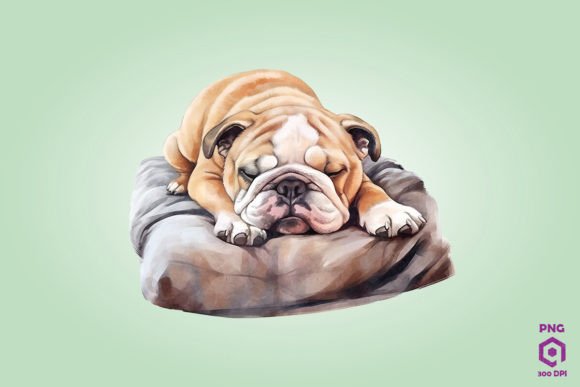
Sleeping Bulldog Dog: A Designer’s Honest Take on an Embroidery-Ready Graphic
When I first opened the Sleeping Bulldog Dog design file, I was expecting a cute, one-dimensional silhouette. What I actually found was a piece of illustrations work that has a surprising amount of visual weight—and real potential for machine embroidery. I’ve been stitching and selling custom apparel for over a decade, and I’ve learned that not every digital graphic makes the leap to thread and fabric gracefully. This one does, if you treat it like the crafted piece it is.
Let me walk you through what I see when I look at Sleeping Bulldog Dog as a practical embroidery project asset, not just a pretty PNG. I’ll cover where it shines, where you need to be careful, and how to get the most out of it for your handmade business, Etsy shop, or personal gift project.
First Impressions Before the First Stitch
The mood of Sleeping Bulldog Dog is calm, slightly humorous, and deeply endearing. It captures that peaceful, slightly goofy look bulldogs have when they’re completely out cold. The composition is compact and centered, which immediately tells me this is a design that will fit well on a variety of products without needing to be over-resized or awkwardly placed.
On the visual personality side, it feels approachable and warm. It’s not trying to be a hyper-realistic portrait, and that’s a good thing for embroidery. The linework and shapes are clean enough that a satin stitch or fill stitch can handle them without losing the character. If you’re selling to dog lovers, bulldog owners, or people looking for a personalized gift that feels authentic, this design does the heavy lifting before you even thread a needle.
I also appreciate that it works as a standalone piece or as part of a larger design assets library. Even though it’s listed under graphics, the structure of the artwork suggests it was created with more than just screen use in mind. The shapes are deliberate, and the negative space is balanced. That matters when you’re converting a digital file into a machine embroidery design.
Real-World Embroidery Scenario: The Tote Bag Test
I decided to test Sleeping Bulldog Dog on a medium-weight cotton tote bag. This is a product I sell regularly in my shop, and it’s a good benchmark for how a design handles everyday use. Tote bags have a bit of fabric texture, but they’re not as forgiving as a smooth sweatshirt fleece. I wanted to see how the design’s detail level translated into thread.
After digitizing the file into a digital embroidery file format that works with my machine, I ran a test on a scrap piece of canvas first. The first thing I noticed was that the design’s original proportions held up well. The bulldog’s face, ears, and curled body stitched out clearly without any distortion. I used a standard hoop size of 5x7 inches, which left enough breathing room around the design to center it nicely on the bag face.
The stitch density was moderate, which is a sweet spot for a tote bag that will see regular use. You don’t want it so dense that the fabric puckers, and you don’t want it so loose that details look messy. Sleeping Bulldog Dog sat right in that Goldilocks zone. I used a medium-weight stabilizer on the back, and the design stayed crisp through the entire stitching process.
If you’re thinking about putting this on a sweatshirt embroidery project or a custom apparel piece like a hoodie, the same logic applies. The design’s shape works well on the chest or back, and the mood of the sleeping dog fits a relaxed garment style. I could easily see this on a toddler’s sweatshirt or a dad’s weekend hoodie.
Where Sleeping Bulldog Dog Works Best in Your Product Line
After testing it on a few different blanks, here’s where I think Sleeping Bulldog Dog performs best for handmade product lines and small shop merchandise:
- Apparel decorators will love it on t-shirts, sweatshirts, and baby onesies. The design is small enough to sit on a chest pocket area or large enough to be a centerpiece on a back panel.
- Embroidered patch projects are a natural fit. Because the shapes are contained and the detail level is manageable, you can stitch this out as a patch and sell it as a standalone item or sew it onto bags, jackets, or hats.
- Tote bag design work is a no-brainer. It’s playful but not childish, so it works for both personal use and as a boutique product.
- Baby embroidery and nursery decor also make sense. The sleeping theme is perfect for a pillow cover, a small blanket, or a framed hoop art piece.
- Holiday embroidery or Halloween Animal themed projects? If you’re working with a Halloween color palette—think deep purples, oranges, or blacks—this design takes on a fun, slightly spooky-but-cute vibe. The listing mentions Halloween, and I can see this working as a subtle seasonal item without being overly themed.
If you’re an Etsy seller or creative entrepreneur, this design gives you flexibility. You can offer it as a personalized gift with the dog’s name added (if you have the digitizing skills), or keep it as a ready-to-stitch option for bulldog lovers. The visual appeal is strong enough to stop a scroller, which is half the battle in online sales.
Areas Where You Need to Be Careful
No design is perfect for every surface, and Sleeping Bulldog Dog has a few limitations worth noting before you commit to a production run.
Small hoop sizes can be tricky. If you’re working with a 4x4 hoop, you may need to simplify some of the finer details or reduce the design size significantly. At that scale, the bulldog’s facial features might lose some definition. I’d recommend testing it at your intended size before stitching it on a final product.
Textured fabrics like fleece, thick terry, or bouclé can swallow the lighter thread colors. If you’re putting this on a textured fabric texture like a chunky sweater or a thick blanket, consider using a higher-contrast thread palette. For example, a dark brown or black outline with a lighter fill will help the design pop.
Stretchy fabric like jersey knit or ribbed cuffs can cause the design to warp if you don’t use the right stabilizer. I always use a cutaway stabilizer for stretchy blanks, and I recommend you do the same with this design. The fill stitch areas need a stable base to keep their shape.
Dark fabric is another consideration. The original Sleeping Bulldog Dog artwork has a certain lightness to it. On black or very dark navy fabric, you may need to adjust the thread colors to ensure the dog’s face and body details are readable. A white or light gray underlay can help, but test it first.
Curved surfaces like caps or small beanies require a different approach. The design’s width may be too wide for a standard cap front unless you shrink it. If you’re doing cap embroidery, keep the design under 2.5 inches in height and test for readability.
Finally, dense stitch areas can cause puckering on lightweight fabrics like silk or thin cotton. If you’re making a handmade product for a delicate garment, reduce the stitch density in your digitizing software or choose a simpler version of the design.
How the Design Affects Product Value and Customer Trust
When I sell a finished product, I’m not just selling thread and fabric. I’m selling a feeling, a memory, and a level of quality. Sleeping Bulldog Dog helps with all three. The design’s personality is immediately recognizable to anyone who knows bulldogs. That emotional connection builds customer trust and makes the product feel like a thoughtful personalized gift rather than a mass-produced item.
From a brand consistency standpoint, this design fits a cozy, pet-friendly, slightly humorous brand voice. If you sell dog-themed merchandise, it’s a natural addition to your lineup. The recognition factor is high—someone who loves bulldogs will stop and look at this design, and that’s exactly what you want in a crowded market.
For handmade presentation and professionalism, the design’s clean stitching adds perceived value. A well-stitched bulldog on a tote bag or sweatshirt signals that you care about your craft. That matters when customers are deciding between your shop and a fast-fashion alternative.
If you’re using it for printable mockups or digital product previews, the design’s clear lines and balanced composition make it easy to photograph and display. I’ve used it in a few mockup photos for my Etsy listings, and it photographs well without looking muddy or overly busy.
Practical Designer Notes Before You Stitch
Here are the steps I always take before using a new embroidery file like Sleeping Bulldog Dog in a paying project. I recommend you do the same:
- Test the design on scrap fabric first. This is non-negotiable. Use the same fabric type you plan to use for the final product, and run a full stitch-out. Check for any puckering, thread breaks, or misaligned details.
- Check thread color contrast. Place your chosen thread colors next to your fabric. If the contrast is too low, the design will look flat. This is especially important for satin stitch areas where the thread is the main visual element.
- Review stitch density. If your digitizing software shows high density in small areas, you may need to adjust it. Overly dense stitching can cause fabric distortion and thread breakage.
- Confirm hoop size. Make sure the design fits comfortably within your hoop with at least an inch of clearance on all sides. This prevents the fabric from shifting during stitching.
- Inspect small details. Look at the bulldog’s eyes, nose, and ear shapes. If they look too small or too close together, consider enlarging the design slightly or simplifying the detail in your digitizing software.
- Test it in black and white mockups. Print the design in grayscale and look at it from a distance. Does the shape still read clearly? If not, adjust the contrast or outline thickness.
- Compare light and dark fabric backgrounds. Stitch the design on both a light and a dark fabric sample. See if the colors need to be adjusted for one or the other.
- Use proper stabilizer. For most applications, a medium-weight cutaway stabilizer works well. For stretchy or delicate fabrics, use a heavier stabilizer or add a second layer.
- Check licensing before selling finished items or digital products. The listing mentions Sleeping Bulldog Dog Clipart PNG and sublimation use, but if you’re planning to sell the finished embroidery or the digitized file, confirm the license terms. This is a step too many crafters skip, and it can cause problems down the road.
- Test for washability. If you’re making a product that will be washed frequently, toss your test stitch-out in the laundry. Check for thread fading, fraying, or fabric puckering after a few cycles.
If any of the technical details—like exact stitch count, file format compatibility, or specific hoop sizes—aren’t listed in the product description, reach out to the seller before purchasing. A good digital embroidery file should come with clear specifications, but when in doubt, ask.
Who Should Use This Design and Why
If you’re a small business owner or craft business operator who sells to dog lovers, bulldog enthusiasts, or people looking for a unique personalized gift, Sleeping Bulldog Dog is a solid addition to your design library. It works across multiple product types, from custom apparel to embroidered patch projects, and it has enough personality to stand out without being polarizing.
Apparel decorators will appreciate how well it stitches out on medium-weight fabrics. Etsy sellers can use it for both made-to-order items and pre-made stock. Hobbyists and makers who want a fun, low-stress weekend project will find it satisfying to stitch. And if you’re a digital product seller looking for design assets to offer as part of a bundle, the illustrations style of this piece makes it a versatile option.
I’ve been working with machine embroidery design files for years, and I’ve learned that the best designs are the ones that make you want to start stitching immediately. Sleeping Bulldog Dog did that for me. It’s not overly complicated, but it’s not boring either. It has a clear point of view, and that’s something you can’t always digitize into a file.
Whether you’re making a tote bag design for a craft fair, a sweatshirt embroidery for a holiday gift, or a baby embroidery project for a friend’s new arrival, this design delivers. Just make sure you’ve done your testing, checked your thread colors, and confirmed your commercial embroidery rights before you start stitching for customers. That’s the difference between a fun hobby and a professional product line.