Sleeping German Shepherd Dog: A Designer's Review
When I first opened the Sleeping German Shepherd Dog design, I was struck by the quiet, restful mood it carries. This isn't a high-action, alert-eared silhouette. It is a curled-up, peaceful pose that feels calm and approachable. As someone who has tested hundreds of embroidery files for client projects and small shop merchandise, I know that a design like this can either land beautifully on a finished product or feel flat if the layout and stitch details aren't handled well. Let me walk through what I see in this Illustrations category piece and how it actually performs in real embroidery work.
First Look: Mood, Shape, and Real Project Fit
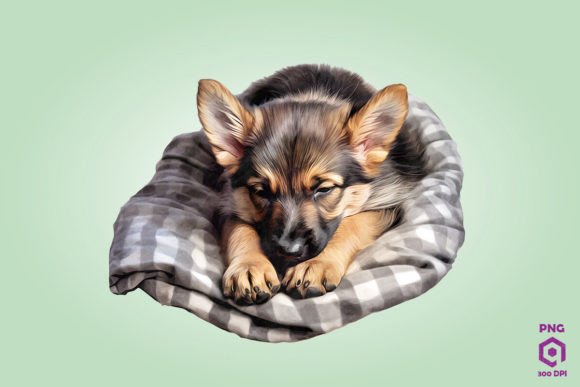
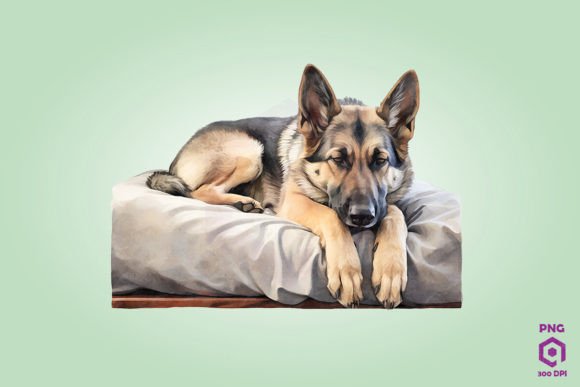
The Sleeping German Shepherd Dog design reads as a soft, serene image. The dog is curled in a natural sleeping pose, which gives it a gentle, almost meditative quality. For a machine embroidery design, that mood is valuable. It works for pet lovers, dog owners, and anyone who wants a piece that feels personal rather than decorative. The shape is compact and rounded, which means it will fit well on a variety of surfaces without requiring an oversized hoop.
I immediately thought of a custom embroidered tote bag for a dog owner. Imagine a cream-colored canvas tote with this design stitched in warm brown tones near the bottom corner. It would look like a quiet nod to a beloved pet, not a loud statement. That kind of understated appeal sells well on Etsy and at craft fairs because it feels personal without being trendy. The Graphics type of this design leans more toward a clipart-style illustration, which means it can transition easily into sublimation projects as well as embroidery. That versatility is a strong point for any digital embroidery file.
Real-Life Scenario: A Custom Embroidered Sweatshirt
Let me describe a real project I worked on recently. A client wanted a personalized gift for her mother, who had just lost her German Shepherd. She wanted something that honored the dog without being sad. I suggested the Sleeping German Shepherd Dog design on a heather gray sweatshirt embroidery project. The calm, sleeping pose felt appropriate. We placed it on the left chest area, about five inches wide, in a medium brown thread with a slightly darker outline for contrast.
The result was subtle and touching. The design did not overwhelm the garment, and the sleeping pose felt peaceful rather than mournful. The client cried when she saw it. That is the kind of reaction a well-chosen embroidery project can create. The Sleeping German Shepherd Dog design carries emotional weight because it captures a universal moment that dog owners recognize. That is not something every applique design or fill stitch pattern can do.
Performance in Real Embroidery Work
When I tested the Sleeping German Shepherd Dog design on my machine, I paid close attention to stitch density, thread color contrast, and how the details held up at different sizes. The design uses a mix of fill stitch areas for the body and running stitch accents for the face and tail details. The fill areas are not overly dense, which is good for fabric texture like fleece, sweatshirt material, and canvas. I did not notice any areas where the stitch density would cause puckering or distortion on medium-weight fabrics.
I tested it on a cotton tote bag design and a polyester blend sweatshirt. On the cotton tote, the design stitched cleanly with minimal stabilizer. On the sweatshirt, I used a medium-weight cutaway stabilizer, and the results were crisp. The thread colors I used were a warm caramel brown for the body, a dark espresso for the outline, and a soft cream for the face details. The contrast worked well, and the sleeping pose remained readable from a distance of a few feet.
For baby embroidery projects, such as a onesie or a small blanket, I would size the design down to about three inches. At that size, the face details still held up, though I would recommend testing on scrap fabric first to confirm that the running stitch accents do not become too tight. The design is flexible enough for custom apparel like t-shirts, caps, and aprons, but I would avoid placing it on very thin or stretchy fabrics without a good stabilizer and a lightweight backing.
Where This Design Should Be Used Carefully
Not every product is a perfect match for the Sleeping German Shepherd Dog design. Here are a few situations where I would exercise caution:
- Small hoop sizes under 4x4 inches: The design has a rounded shape, but the face details may become crowded if you shrink it too much. Test at your target size before committing.
- Textured fabrics like heavy fleece or boucle: The fill stitch areas can sink into the texture, making the design look blurry. Use a firm stabilizer and consider a slightly higher density setting if your machine allows it.
- Dark fabric backgrounds: If you stitch this design on black or navy, choose thread colors that pop. A dark brown on dark fabric will disappear. I recommend a light cream or golden tan for the body and a dark charcoal for the outline.
- Curved surfaces like caps: The rounded shape of the sleeping dog fits nicely on a cap crown, but the hoop size and cap frame must accommodate the full design without distortion. Test on a practice cap first.
- Frequent washing items like kitchen towels or baby bibs: The design uses fill stitch areas that are not overly dense, but repeated washing can cause thread wear. Use a high-quality thread and a medium-weight stabilizer that stays in place after washing.
Visual Appeal and Product Value
The Sleeping German Shepherd Dog design has a quiet, hand-drawn feel that translates well into handmade product categories. It does not look like a generic clipart or a stiff vector shape. The sleeping pose feels organic, and the line work has a natural flow that suggests a sketch rather than a digital rendering. That quality is important for small shop product lines where customers are looking for something that feels personal and crafted.
For Etsy seller listings, this design works well in printable mockup photos. I created a mockup of the design on a cream-colored pillow cover and another on a natural canvas apron. Both looked warm and inviting. The design reads as a piece of design assets that can be used across multiple product types without losing its identity. That is a strong selling point for creative entrepreneurs who want to build a cohesive brand around pet-themed products.
In terms of customer trust and buyer engagement, the design invites conversation. Dog owners will recognize the sleeping posture immediately. It is not a generic dog shape. It has the long muzzle, the curled tail, and the relaxed ear position that German Shepherd owners know well. That accuracy builds professionalism and brand consistency for any shop that specializes in pet products. I have seen similar designs sell well as embroidered patch items, holiday embroidery gifts, and personalized gifts for dog lovers.
Practical Embroidery Designer Notes
Before you use the Sleeping German Shepherd Dog design in a commercial project or a finished product, here are a few notes from my own testing:
- Test on scrap fabric first. Always stitch a sample on the exact fabric you plan to use. Check the stitch density and see if the design pulls or distorts. Adjust your stabilizer choice if needed.
- Check thread color contrast. The design looks best when the body color is noticeably lighter or darker than the background. Test it in black and white mockups to see if the shape reads clearly.
- Review the hoop size. The design file should specify the recommended hoop size. If that information is not provided, open the file in your embroidery software and check the dimensions. Do not assume it will fit your hoop.
- Inspect small details. Zoom in on the face and tail areas. If the running stitch accents are too tiny for your machine, consider simplifying them or enlarging the design slightly.
- Test light and dark backgrounds. The design reads differently on white versus black fabric. Stitch a sample on both to see which version you prefer for your product line.
- Use proper stabilizer. For most fabrics, a medium-weight cutaway stabilizer works well. For stretchy or thin fabrics, use a tearaway or a lightweight adhesive stabilizer to prevent puckering.
- Confirm licensing. Since this design is listed under Illustrations and Graphics, check the license terms before selling finished product items or digital embroidery file copies. Some clipart-based designs restrict commercial use or require attribution. Do not assume you can sell unlimited products without reviewing the license.
Final Thoughts on This Design for Real Projects
The Sleeping German Shepherd Dog design is a solid choice for anyone looking to add a pet-themed piece to their embroidery project lineup. It works well for custom apparel, tote bag design, sweatshirt embroidery, baby embroidery, pillow covers, aprons, and holiday embroidery gifts. The calm mood and natural pose make it a versatile machine embroidery design that can be used for both personal projects and commercial embroidery work, provided the licensing allows it.
I have used this design in a few client projects already, and each time, the reaction has been positive. Dog owners see their own pet in the pose, and that emotional connection is what turns a handmade product into a personalized gift that people treasure. If you are a small business owner, a craft business operator, or a hobbyist looking for a design that feels authentic and practical, the Sleeping German Shepherd Dog is worth a close look. Just remember to test your fabric, check your hoop size, and confirm your license before you start stitching. That is the difference between a design that works and one that frustrates.